For those tired of boring museum lectures and eager to understand how fashion became weapon, armor, or the silent demonstration of power and weakness simultaneously.
What This Tour Is About
Tell me, my dear, is your outfit today a manifesto of freedom or a carefully constructed cage? Do you seriously think fashion is about «pretty»? Oh, leave that sweet naivety to those who can’t tell silk from a theater curtain!
In the halls of the Kunsthistorisches Museum (KHM) hang not just paintings. Scandals, intrigues, and political coups are frozen there, encrypted in every stitch. We will dissect the history of costume with the impartiality of a surgeon and the passion of a collector. Fashion here is not decoration — it is armor, resource, and the silent demonstration of status.
Spoiler: your wardrobe was designed five hundred years ago in the stuffy workshops of the Medici and Habsburg courts. You just didn’t know it.
The Route: From Gothic to Baroque
Late Gothic: Burgundian Angle and the Mystique of Verticality
We will begin in an era when costume reached upward, imitating the spires of cathedrals. Before the canvases of Rogier van der Weyden and Joos van Cleve, we will uncover the secret of the «long lines».
Listen to how sweetly these names sound: hennin — that cone of power, crowned with a flowing veil; surcoat, trimmed with ermine fur; pourpoint, hugging the body like a second skin. Here, cut is the geometry of spirit. We will learn why a high forehead was considered a mark of caste and how the collet turned a man into a knight, even if he never held a sword.
«Style is character,» the era will whisper to us — an era where every fold of fabric was regulated by strict etiquette.
Renaissance and High Renaissance: Triumph of Flesh and the Golden Ratio
Moving to the halls of Raphael, Dürer, and Titian, we enter a world where man briefly took his place beside the Creator. Here, fashion becomes tangible, «tasty», almost sinful.
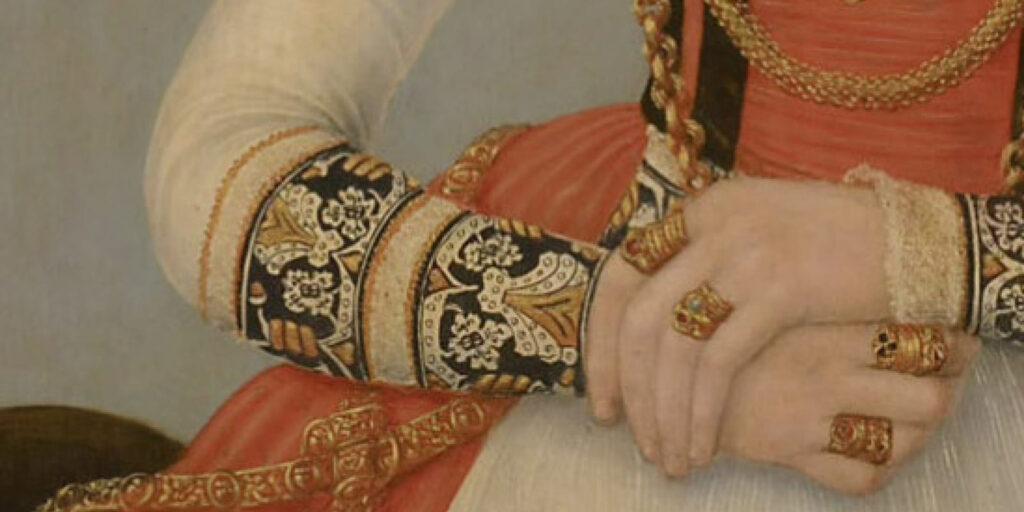
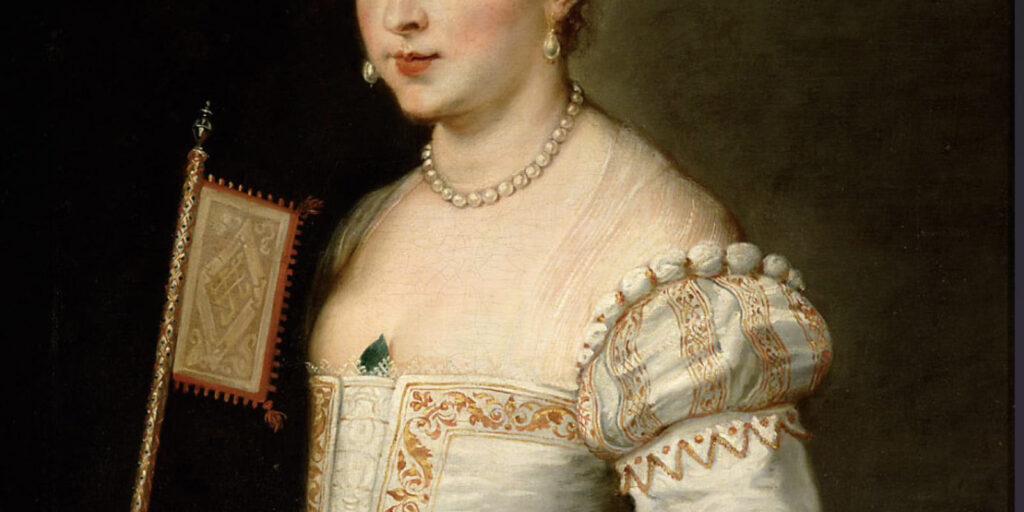
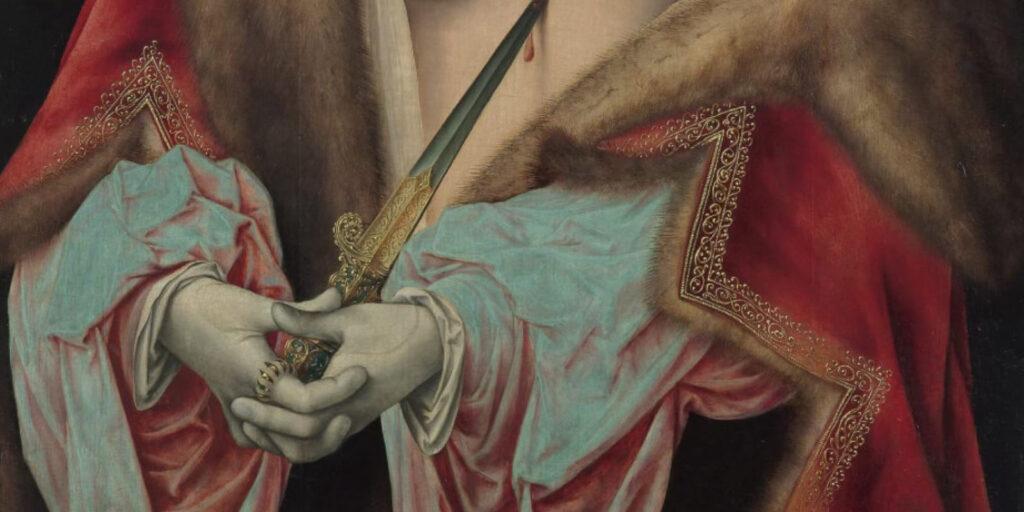
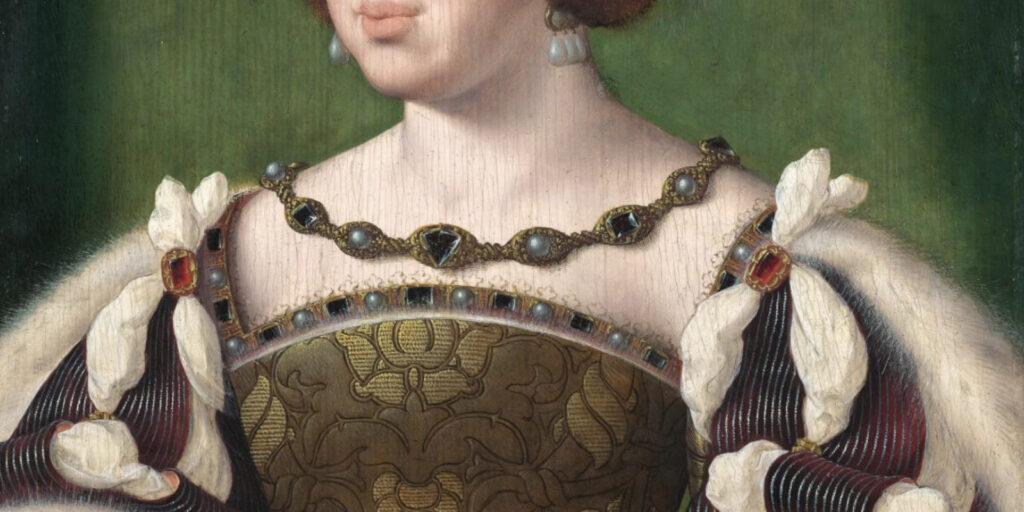
Look closely at the details: schaube with lush fur collars, slashed sleeves through which the finest shirt fabric — camicia — provocatively gleams white. We will discuss how Hans Holbein the Younger constructed male masculinity through hypertrophied shoulders and codpieces (bragettes) , which became symbols of vital strength. This was a time when the ferronnière on a courtesan’s forehead was not just an ornament but a magical accent, focusing the gaze of admirer and patron alike.
A question we will ask:
Why, in an era when man declared himself the measure of all things, did his costume become simultaneously armor and the most vulnerable part of his image?
Mannerism: Exquisite Deformation and Intellectual Play
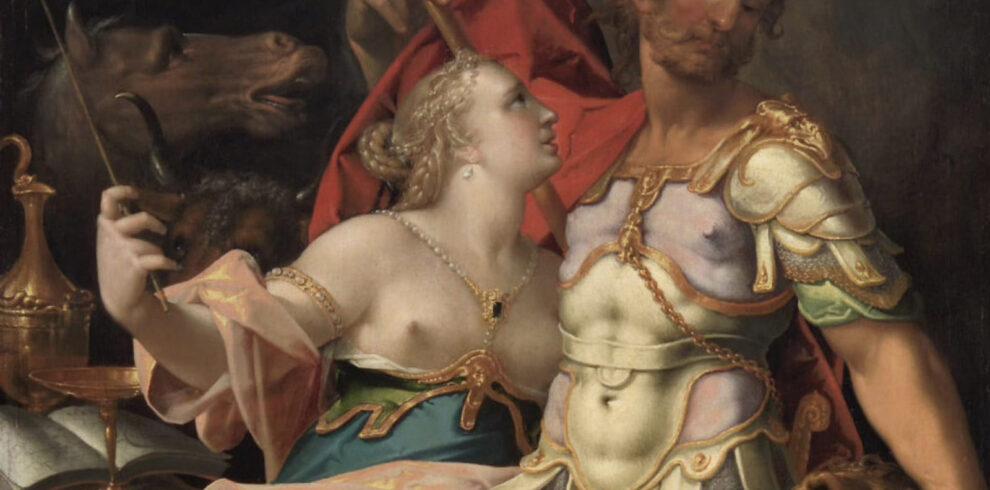
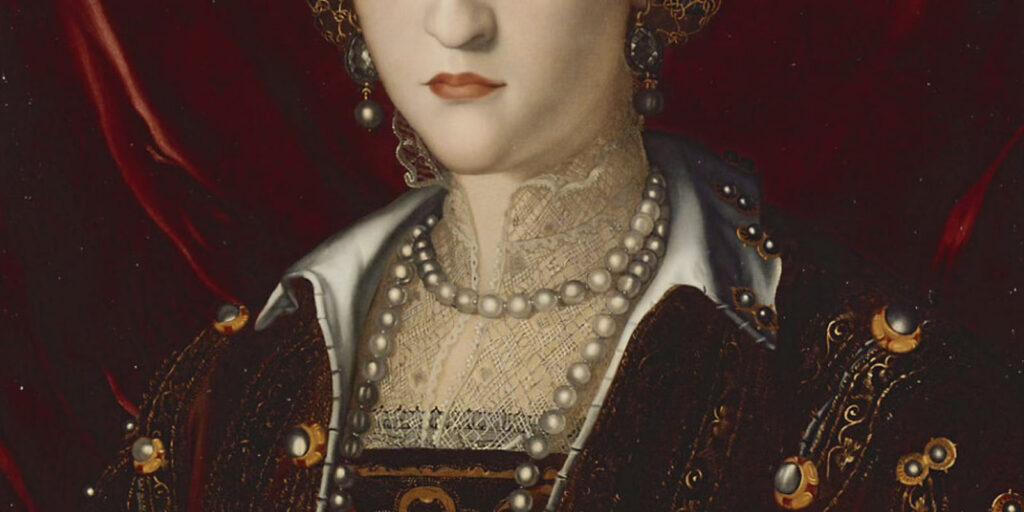
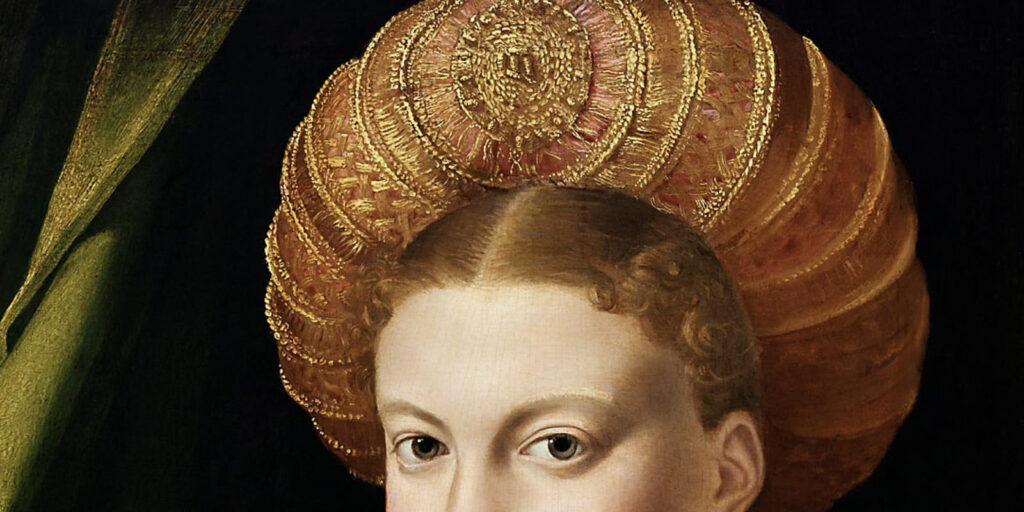
In the halls where hang portraits by Bronzino, Parmigianino, and Paris Bordone, an exquisite deformation awaits us. Costume becomes an intellectual puzzle. Here, the «purring» of details grows quieter and more dangerous:
ruff — shackling the neck in alabaster folds; corset-plate — turning the torso into an unshakable cone; lacing and aiglets — hiding more than they reveal.
What we will ponder here:
What is a Mannerist costume? It is a cipher where every ribbon, every slash is a message intelligible only to the initiated. Bronzino did not just paint portraits — he painted riddles.
Reformation and Northern Renaissance: Black Cloth as the Most Expensive Color
And nearby — the strict, almost monastic protest of Vermeer, Rembrandt, and Christoph Amberger. We will analyze how the black cloth of the Dutch became the most expensive color in history and how the whiteness of starched collars replaced family diamonds.
«We spend more on clothes than on education, because ignorance can be hidden under a beautiful cloak,» Jonathan Swift quipped. And the Dutch proved it: their asceticism was a luxury accessible only to the chosen few.
Lucas Cranach occupies a special place. Here arises the tense combination of Protestant ethics and courtly eroticism. On one hand — discipline and control. On the other — visual pleasure in the body, which does not disappear but merely takes on more refined forms.
Spain: Verdugado and the Armor of Etiquette
Diego Velázquez will present us with infantas in their monumental verdugados — farthingales that were not just skirts but state borders. We will study how the corset-plate deprived a woman of the ability to breathe but granted her the right to command.
What we will see:
Spanish costume is a citadel. Here the ruff reaches the size of a millstone, hose turn legs into columns, and every button is evidence of belonging to an empire on which the sun never set.
Flanders and Baroque: Rubens, Van Dyck, Jordaens
Then we will immerse ourselves in the sensual element of Peter Paul Rubens and the aristocratic nonchalance of Anthony van Dyck.
Here, fashion is a flow: reticella lace, cascades of satin, and ribbons scattered with that very ironic lightness that their predecessors so lacked.
Jacob Jordaens continues this line, affirming the body’s right to joy and the fullness of life.
The question that remains:
Why, in an era of wars and religious conflicts, does costume become exactly this — excessive, physical, almost provocative? Perhaps because fashion is the last bastion of life in the face of chaos? Does this thought not strike you as more relevant than ever?
French Fashion of Louis XIV: The Apotheosis of Versailles
The finale of our journey — brilliant, self-absorbed France. Anton von Maron, Anton Raphael Mengs, Élisabeth Vigée Le Brun captured an era of costume as spectacle, and of frivolous and dangerous liaisons as a way of life.
What we will see:
Powdered wigs, lace jabots, satin heeled shoes — here fashion finally ceased to be protection and turned into decoration. But a decoration behind which stood absolute power and the refined temptation of that power.
What Unites All These Traditions?
Fashion is not the opposite of culture — it is one of its main tools.
It is the language through which society speaks about power, religion, fear, status, and desire. Cut becomes a political declaration. Detail becomes a manifesto. Jewelry becomes a cipher, intelligible only to the initiated.
«Customs are a matter of geography,» Talleyrand joked. And I will add: fashion is a matter of power over time.
What We Will Leave Unsaid (But You Will Think About Anyway)
Modern fashion, just like five hundred years ago, remains a game of status. We still choose not color but message. Not brand but belonging to a circle. Not cut but armor against others’ gazes — or an unambiguous invitation.
But there is one difference. Today we are told that choice must be «mindful.» Yet in the era of the Old Masters, no one pretended that fashion was about freedom. It was always about power.
And here arises the most uncomfortable question:
Are we truly freer in choosing our image — or have we simply gotten better at pretending that others’ opinions don’t matter to us?
Your Guide
Lyubov Dzhurinskaya, cultural historian with degrees in art history and fashion design. A licensed guide in Vienna and Austria.
I look at the canvases of the Old Masters with a double gaze: that of an academic cultural historian and a practicing fashion designer. I won’t just show you «pretty fabrics.» I will teach you to distinguish a collet from a pourpoint and explain why the ferronnière on a beauty’s forehead is not just an ornament but a subtle message.
I won’t stand on ceremony. I will show you that fashion is not about vanity — it is about the ability to speak about yourself without uttering a single word.
What You Will Take Away
- An understanding of how art speaks about status, power, and desire through costume
- The ability to «read» the cut and details on portraits of the Old Masters
- A vocabulary of terms that caress the ear: from schaube to reticella, from bragette to verdugado
- Irony toward those who think fashion began with 20th-century runways
- Intellectual drive and, perhaps, a few uncomfortable questions for your own wardrobe
Who This Tour Is For
- Those looking for unusual tours in Vienna
- Designers, jewelers, stylists, and art historians — for deep visual literacy
- Those tired of boring museum lectures
- Those interested in fashion history and wanting to add living intellectual drive to it
- Those ready for a conversation about fashion without censorship — from Gothic to Baroque