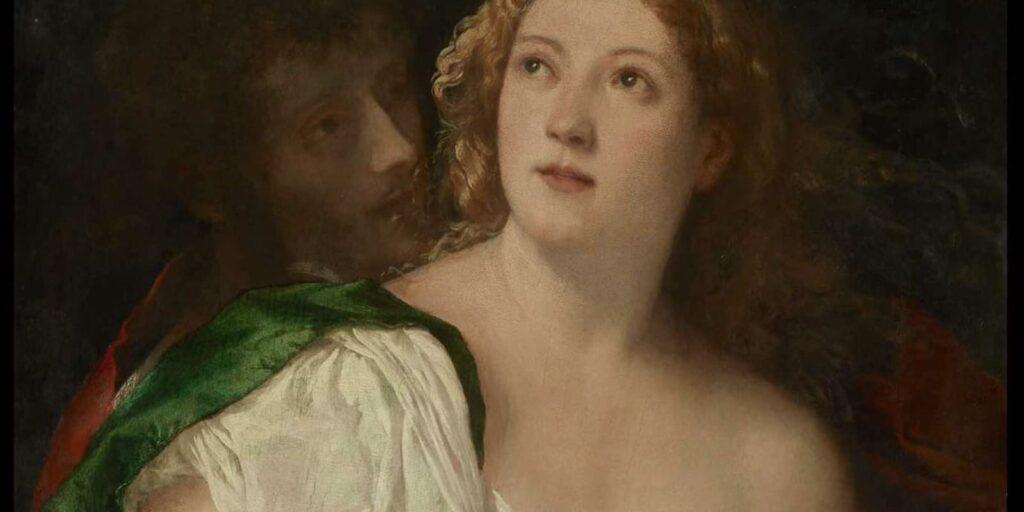
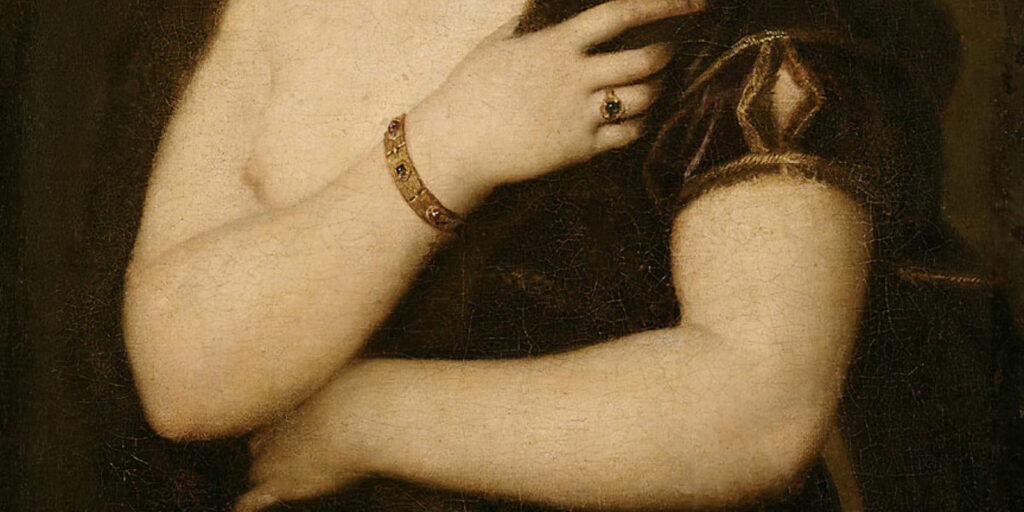
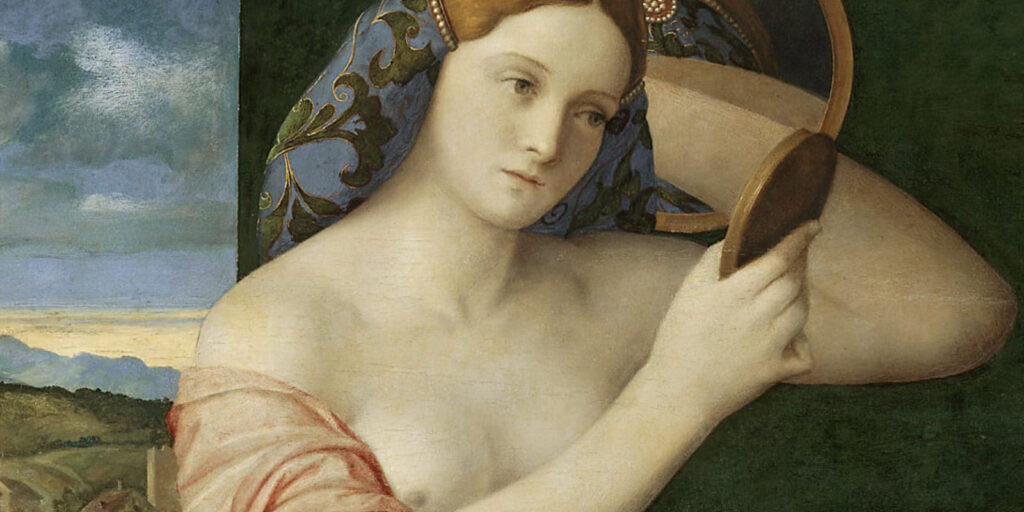
For those tired of boring museum lectures and eager to understand how the great artists spoke about what we still hesitate to mention.
What This Tour Is About
We think we live in an age of freedom: psychology, mindfulness, body practices. But eroticism as a deep cultural experience is still being suppressed. Only now, more politely.
What if the great artists of the 16th and 17th centuries were more honest than we are? What if their paintings are not just «beautiful» but complex visual treatises on the nature of desire, power, and prohibition?
On this tour, we will walk through the halls of the Kunsthistorisches Museum (KHM) and see how European culture shaped a complex coordinate system between body and spirit, between Eros and Agape, between desire and morality.
Spoiler: sexuality has no age. And the great masters knew this long before our coaches and retreat gurus.
The Route: From the Renaissance to Mannerism
Italy: Eros vs. Agape
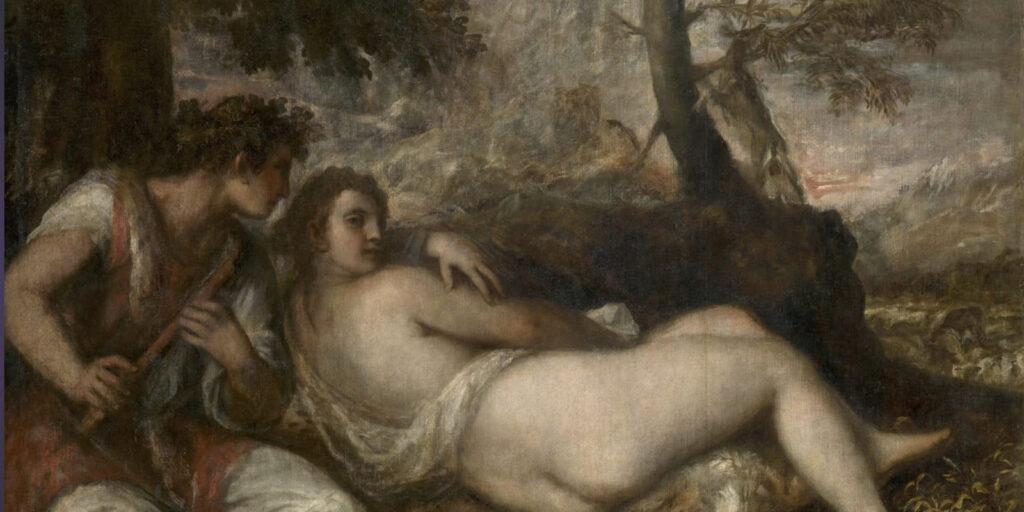
During the Renaissance, Italy became the stage for a massive intellectual upheaval. Ancient ideals intertwined with Christian dogma, and the central theme became the synthesis of Eros (earthly, passionate desire) and Agape (sacrificial, divine love).
Bellini, Titian, Raphael, and Tintoretto worked precisely within this tension. Their works are not merely depictions but visual treatises where the body becomes a battlefield between the sensual and the sacred.
What we will understand here:
Eros is not just passion — it is the driving force of knowledge. And Agape is not just self-sacrifice — it is a way to legitimize desire.
Giulio Romano and Pietro Aretino: Deconstructing Hypocrisy
These two did not bother with propriety. Giulio Romano and Pietro Aretino exposed the double standards of society, showing that morality is often just a convenient mask.
Their works and texts are not just art — they are a critique of cultural taboos. They mocked those who hide desire behind performative virtue.
A question we will ask:
Why today, with access to psychotherapy and «mindfulness», are we often more repressed than people in the 16th century?
Rudolf II’s Prague Mannerism: Eroticism as Intellect
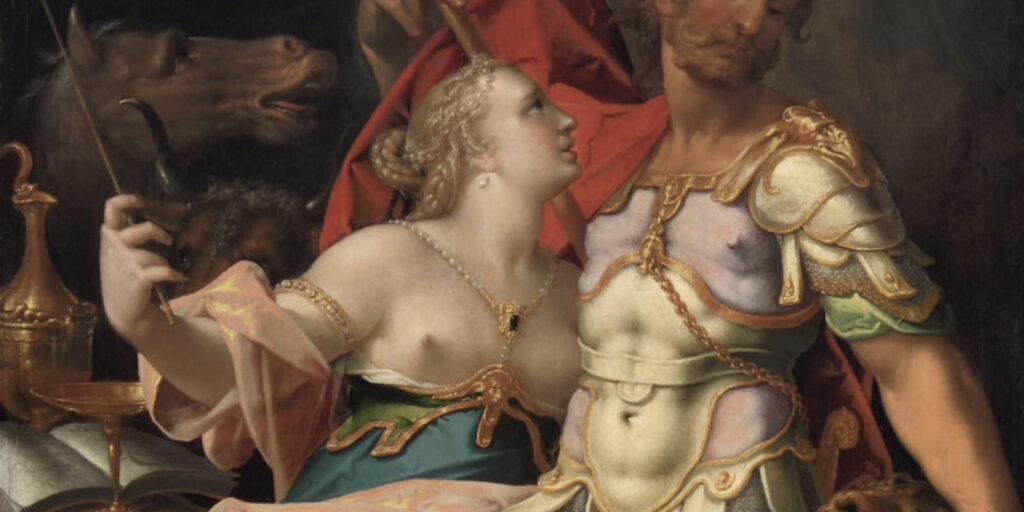
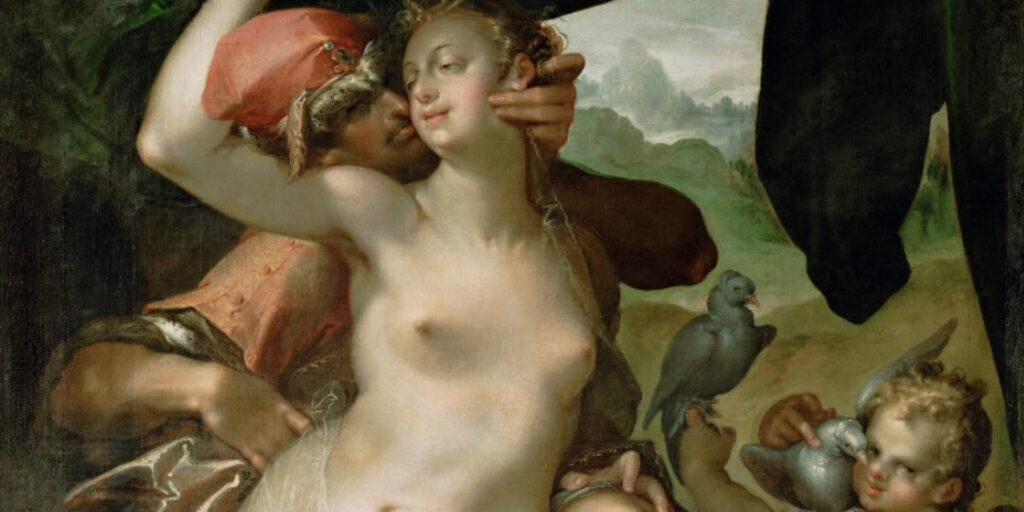
At the court of Emperor Rudolf II, eroticism took on a completely different form. It was no longer a direct statement but a complex code tied to natural philosophy, alchemy, and early scientific inquiry.
Spranger, Hans von Aachen, Josef Heintz created images in which the body becomes part of a metaphysical experiment:
- Metamorphoses — as a symbol of the transformation of desire
- The synthesis of flesh and matter — as a reflection of the search for universal laws of nature
- Intellectual voyeurism — as a unique type of viewer experience, where observation becomes an act of knowledge
What we will reflect on here:
Eroticism here is not about arousal in the literal sense. It is about the boundaries of permissible knowledge. Rudolf II collected not just paintings but keys to the secrets of nature.
Rubens’ Flanders: The Rehabilitation of the Body
Catholic Flanders, under Peter Paul Rubens, took a different path. Here, physicality was seen as a manifestation of the divine creative power of nature.
The voluptuous forms in his paintings are not merely eroticism — they are symbols of fertility, vitality, and abundance that triumph over the chaos of war.
Jacob Jordaens continues this line, affirming the body’s right to joy and the fullness of life.
What we will see:
Rubens’ «The Little Fur» (Das Pelzchen) is one of the most intimate and daring erotic portraits of its time. No justifications. No shame. Simply a body that has the right to be desired at any age.
Dutch Art: Eroticism as a Riddle
In 17th-century Dutch painting, eroticism was never straightforward. It hid behind domestic realism and was generously spiced with didactic sarcasm.
Gerard ter Borch, Jan Steen, Gerrit Dou — masters of suggestion. The viewer of that era read their paintings like puzzles: behind an innocent domestic scene lay a call for prudence or a biting mockery of human frailties.
Why this matters:
We have forgotten how to read the language of gestures, details, and context. Yet that is precisely the key to understanding how 17th-century society mocked what today’s moralists try to ban.
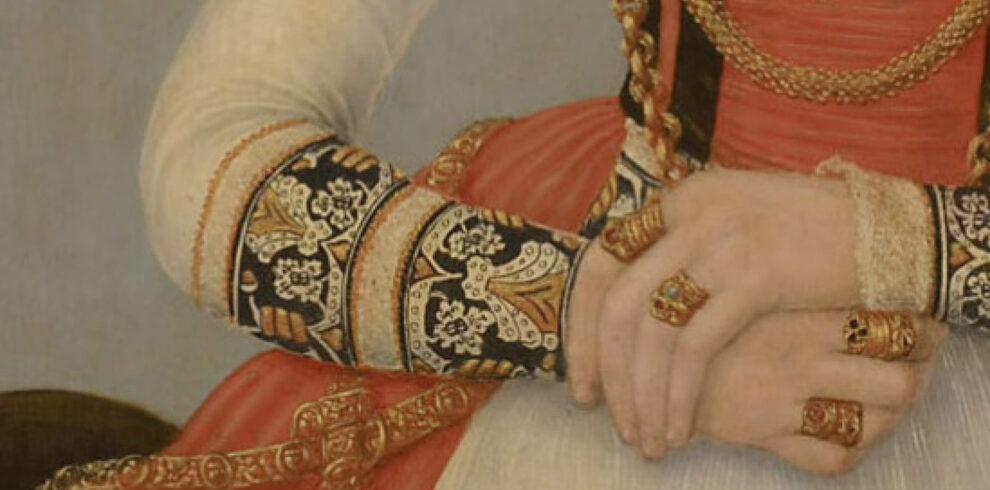
Lucas Cranach: Protestant Ethics and Courtly Eroticism
German humanism, particularly the work of Lucas Cranach, deserves special attention.
Here we encounter a tense combination of Protestant ethics and courtly eroticism. On one hand — discipline and control. On the other — visual pleasure in the body, which does not disappear but merely takes on more refined forms.
The question that remains:
Can control and desire coexist? Or does one always destroy the other?
What Unites All These Traditions?
The realization that eroticism is not the opposite of culture — it is an integral part of it.
It is the language through which society speaks about power, religion, fear, aging, desire, and freedom.
What We Will Leave Unsaid (But You Will Think About Anyway)
Modern «norms» and so-called «traditional values» operate more subtly than medieval prohibitions. They do not forbid directly — they cultivate guilt, shame, and a sense of inadequacy.
As a result, a person loses not only freedom of choice but also contact with their own nature.
We are taught that:
- the body is something to be ashamed of
- age is a verdict
- desire is something shameful
And then we wonder why there is no energy, no taste for life, no pleasure.
This Might Be Your Last Chance to See All This Without Filters
History already knows examples of art being «purified» of excessive physicality — for the best of reasons, of course.
Today, this task is carried out not by inquisitors but by algorithms and new moralists.
So the question remains open:
Are you ready to look — or do you prefer to let others decide once again what you are allowed to feel?
Your Guide
Lyubov Dzhurinskaya, cultural historian with degrees in art history and fashion design. A licensed guide in Vienna and Austria.
I won’t stand on ceremony. I will show you that eroticism is not about depravity — it is about aliveness, about the right to feel, to want, and to choose.
What You Will Take Away
- An understanding of how art speaks of desire — without shame or simplification
- The ability to «read» erotic codes on the canvases of the Old Masters
- Intellectual drive and, perhaps, a few uncomfortable questions for yourself
- A sense of irony toward those who try to ban what the great artists considered natural
Who This Tour Is For
- Those looking for unusual tours in Vienna
- Those tired of boring museum lectures
- Those interested in art, psychology, and who want «mindful» desire
- Those ready for an intellectual conversation without censorship