For those tired of standard routes and eager to see the Vienna hidden from prying eyes.
What This Tour About Freemasons in Vienna Is About
Freemasons in Vienna are not just a topic for conspiracy theories. Instead, they are part of a long story about architecture, symbols, knowledge and power. On this tour, we read the city like a blueprint. As a result, Vienna becomes an intellectual detective story.
The world is not chaos. Rather, it is a complex design. Therefore, Vienna is the perfect city to learn how to read it.
First, we trace an unbroken connection: Templars → Kabbalists → Gothic cathedral builders → Freemasons. Then we see how the engineering of the Jerusalem Temple, destroyed in 70 AD, echoes in the structures of Vienna’s Gothic cathedrals.
Spoiler: it is not a coincidence. However, it is also not a reptilian conspiracy.
“Raise high the roof beam, carpenters!” If your emotions are elevated and your goal is clear, it becomes achievable. Especially when you have a good blueprint.
The Route: Freemasons in Vienna and the Search for the “Great Proof”
The route follows places where stone, geometry, music and hidden symbols meet. First, we move from Gothic workshops to churches and underground traces. Then Masonic stories begin to connect these places. As a result, the city stops looking like a beautiful postcard and starts behaving like a coded text.
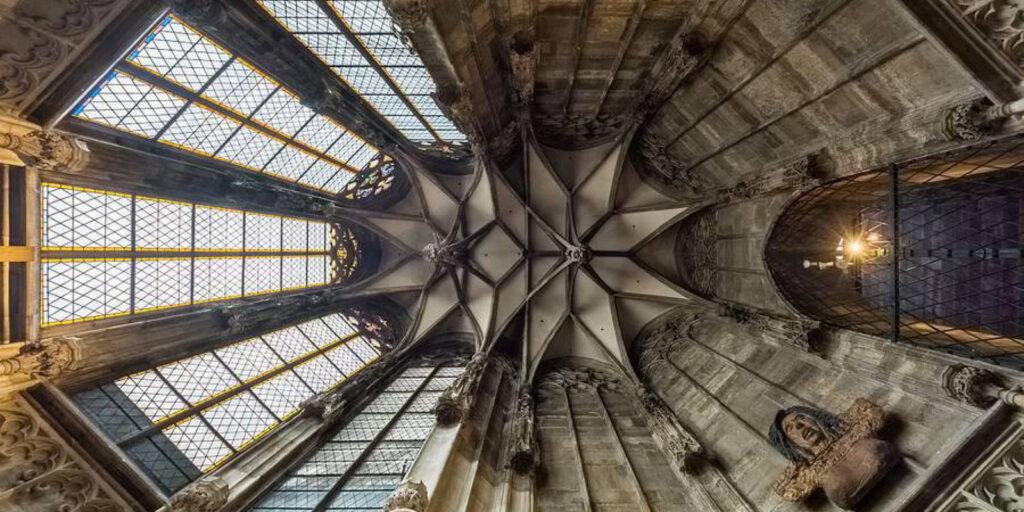
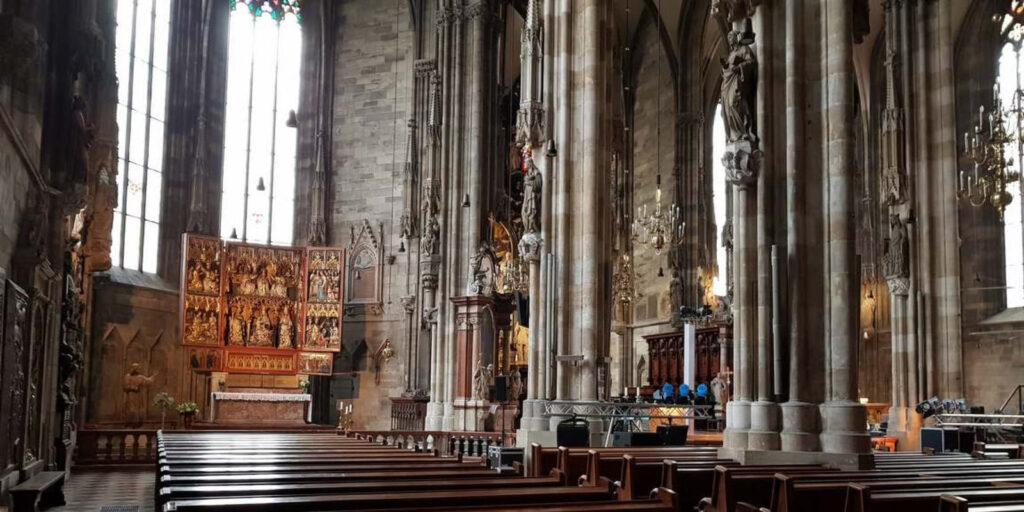
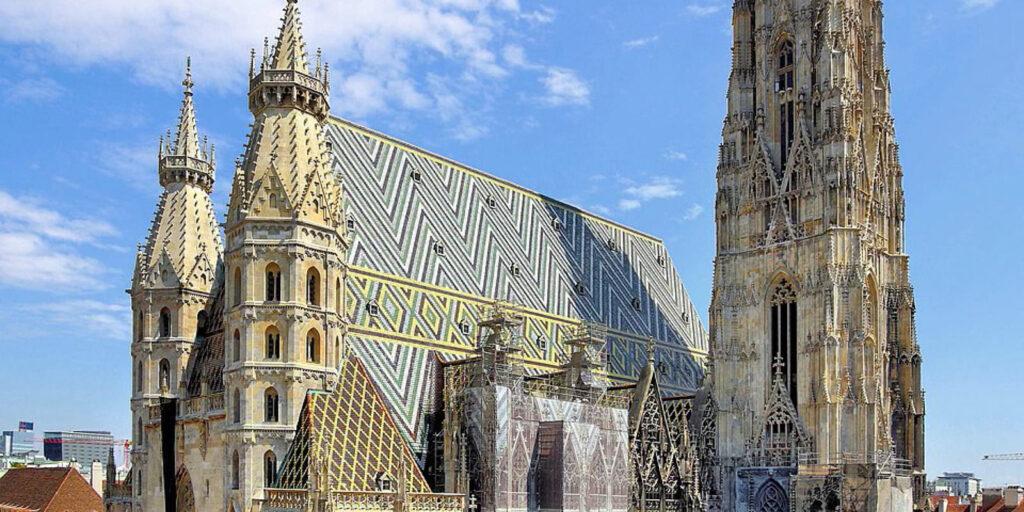
St. Stephen’s Cathedral and the Virgilius Chapel
We start where the secrets of stonemasonry were kept for centuries. These were the Bauhütte, or cathedral workshops, now recognized as UNESCO heritage. According to the logic of this route, knowledge flowed here from much older traditions linked to the Jerusalem Temple.
Tourists usually walk by, take photos of the cathedral and go for Viennese strudel. We, however, will go deeper. Literally.
What we will ponder here:
Is geometry only a method of measurement? Or is it a language through which the Great Architect speaks to us? Pythagoras of Samos believed that numbers rule the world. In fact, he was not entirely wrong. Try living one day without digits.
By studying mathematics, we try to understand the structure of creation. Today, this idea continues in another form. Instead of compass and square, quantum physics uses particles and strings. Still, the question remains almost the same: what hidden order stands behind the visible world?
What we will see here:
Beneath our feet, in the very heart of Vienna, lies a story hidden from most eyes. In the 15th century, the master builder of St. Stephen’s Cathedral created an underground passage from the Bauhütte to a chapel. It was discovered only in 1973 during metro construction. Imagine the workers’ reaction: “Boss, there is a dungeon here. Where should we put the pipes?”
Later, this remarkable discovery became the subject of academic research at the University of Vienna.
Nearby stands the invisible figure of Austrian Saint Coloman. He is usually venerated as a martyr. Yet in this story, he appears as a mathematician and surveyor connected with secret geodetic tasks across Northern Europe. In other words, he was a saint who calculated and drew. Judging by the fact that the cathedral has stood for almost a thousand years, he calculated well.
Minoriten Church and the Hidden Code of The Last Supper
Our next stop is a Gothic basilica with a mosaic copy of The Last Supper. It was created with almost photographic precision. In fact, it is so precise that you may suspect Giacomo Raffaelli had a secret camera in 1809.
What we will ponder here:
What if Leonardo da Vinci was not only a genius artist? Perhaps he was also a keeper of secrets. And what if The Last Supper contains a coded message?
Dan Brown made a fortune on this hypothesis with The Da Vinci Code. However, his book only popularized questions that you can explore with your own eyes in Vienna. Instead of Tom Hanks in the lead role, there will be you and me.
The Viennese mosaic is not just a copy. Rather, it is testimony. It makes us ask whether the “Great Proof” existed — the knowledge that the Templars may have brought from Jerusalem and passed down through generations. Therefore, we will also ask why this idea mattered to Napoleon and the Habsburg emperors.
Augustinian Church and Masonic Memory
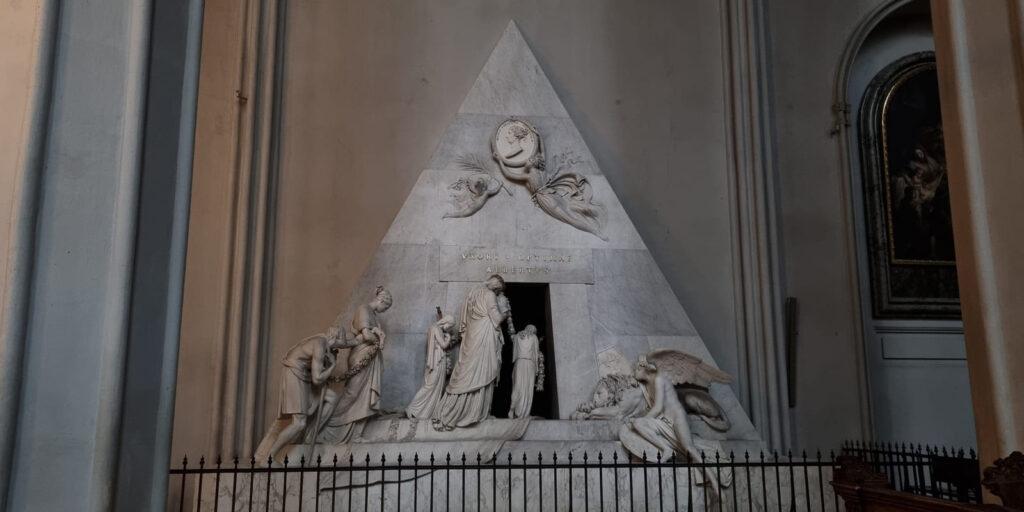
We enter a church where an entire era is frozen in stone. Here stands the Freemason cenotaph by Antonio Canova. It looks impressive. Even if you do not know Canova, one thing becomes clear immediately: this man knew exactly what he was doing.
What we will ponder here:
Why could a Holy Roman Emperor be a Freemason? Francis Stephen of Lorraine, husband of Maria Theresa, was not only “the Empress’s consort”. In fact, he was a researcher, a naturalist and the Master of a Viennese Masonic Lodge.
In other words, he balanced imperial power with the search for hidden knowledge. A true Habsburg-style work-life balance.
St. Mary Magdalene Church and the Vanished Stone
The church burned down in 1878. Today, only its outline remains. Once, according to one version, this place served as a portal to the underground. Naturally, such places attract conspiracy theories. We will politely leave most of them outside.
What we will ponder here:
What remains when stone disappears? Saint Bernard of Clairvaux, mystic and inspirer of the Crusades, taught that truth is not in the walls. Instead, it is in what the walls protect.
He became a link between the Templars and the Kabbalists. Judging by the traces he left in history, he was also quite an intriguer.
According to one version, treasures could have moved here after the destruction of the Templar Order in 1307. That was the famous Friday the 13th. Soon after, Switzerland and Georgia experienced a sharp economic rise in the 14th century. Coincidence? Or a clue leading back to the “Great Proof”? We will discuss that too.
Knight Hugues de Payens, founder of the Templar Order, went to Jerusalem not for gold but for knowledge. What he found changed history. The only question is where the threads of this story lead today. And whether we will get tangled in them.
Mozart and the Freemasons in Vienna
Where there are Freemasons, there is Mozart. He was commissioned to write an anthem of the Enlightenment and Freemasonry — the opera The Magic Flute. Why would a Masonic lodge commission music from a composer? Because even learned men in aprons appreciate the mathematics of music.
Besides, this music contains numbers, symbols and encoded meanings. Even the Masons themselves may not have deciphered all of them.
And what about Freemasons today?
After World War II, when the Allied forces left Austria, the Grand Lodge of Austria resumed open public activity. Therefore, the ideas of the Enlightenment emerged from the shadows again and illuminate our route.
Your Guide
Lyubov Dzhurinskaya, certified cultural historian and licensed guide for Vienna and Austria.
What You Will Take Away
You will take away historical facts, scholarly hypotheses and architectural evidence. In addition, you will get intellectual thrill. No tinfoil hats required. We do not provide ready-made answers. Instead, we teach you to ask better questions. And perhaps to laugh a little at those who see a conspiracy under every stone.
Who This Tour Is For
- Travellers looking for unusual tours in Vienna
- Those who want to decipher symbols on old building façades
- Guests ready for an intellectual detective story without conspiracy theories
- Anyone interested in Freemasons in Vienna, Gothic architecture, Mozart and hidden urban symbols
This tour about Freemasons in Vienna is for those who want more than a standard walk. It is for people who enjoy history, symbols, architecture and dangerous questions asked with a smile.